If you're wrapping around 20–30 pallets a day, it's worth calculating whether a pallet wrapping machine could lower your overall wrapping cost. At this volume, labour time and film consumption can make a noticeable difference, although the actual break-even point depends on your pallet volume, labour rate, film usage and machine cost.
For lower-volume warehouses, hand wrapping can still be the more practical option. The key is to compare the total cost per pallet, rather than looking only at the price of the film or the upfront cost of a machine.
Hand Stretch Wrap vs Machine Wrap: At a Glance
| Factor | Hand stretch wrap | Machine pallet wrap |
|---|---|---|
| Cost per pallet | Often lower at low volumes | Can be lower at higher volumes |
| Film used per pallet | Varies with operator and technique | More controlled and consistent |
| Time per pallet | Longer | Generally faster |
| Upfront cost | Minimal | Higher |
| Consistency | Depends on operator | More consistent |
The difference becomes more significant as pallet volumes increase. A few minutes saved on each pallet can translate into substantial labour savings over a full year.
Understand With This Example
Consider a warehouse wrapping 50 pallets per day, five days a week, for 50 weeks a year. That's approximately 12,500 pallets annually.
For this example, assume hand wrapping takes four minutes per pallet and labour costs $30 per hour. That puts the wrapping labour at around $2 per pallet, or approximately $25,000 per year.
If a machine reduces wrapping time to 1.5 minutes per pallet, the labour cost falls to around $0.75 per pallet, or about $9,375 annually.
That's a potential labour saving of approximately $15,625 per year before considering film consumption, machine maintenance, electricity and the machine's purchase price.
Film usage can change the result further. A machine applies film at a controlled tension and wrapping pattern, which can help reduce unnecessary film use.
This is why comparing machine stretch film vs hand film by roll price alone can be misleading. The most important thing that matters is how much film you use and what it costs to wrap each pallet.
The Hidden Costs of Hand Wrapping
The labour cost of hand wrapping is easy to overlook because it is spread across every pallet.
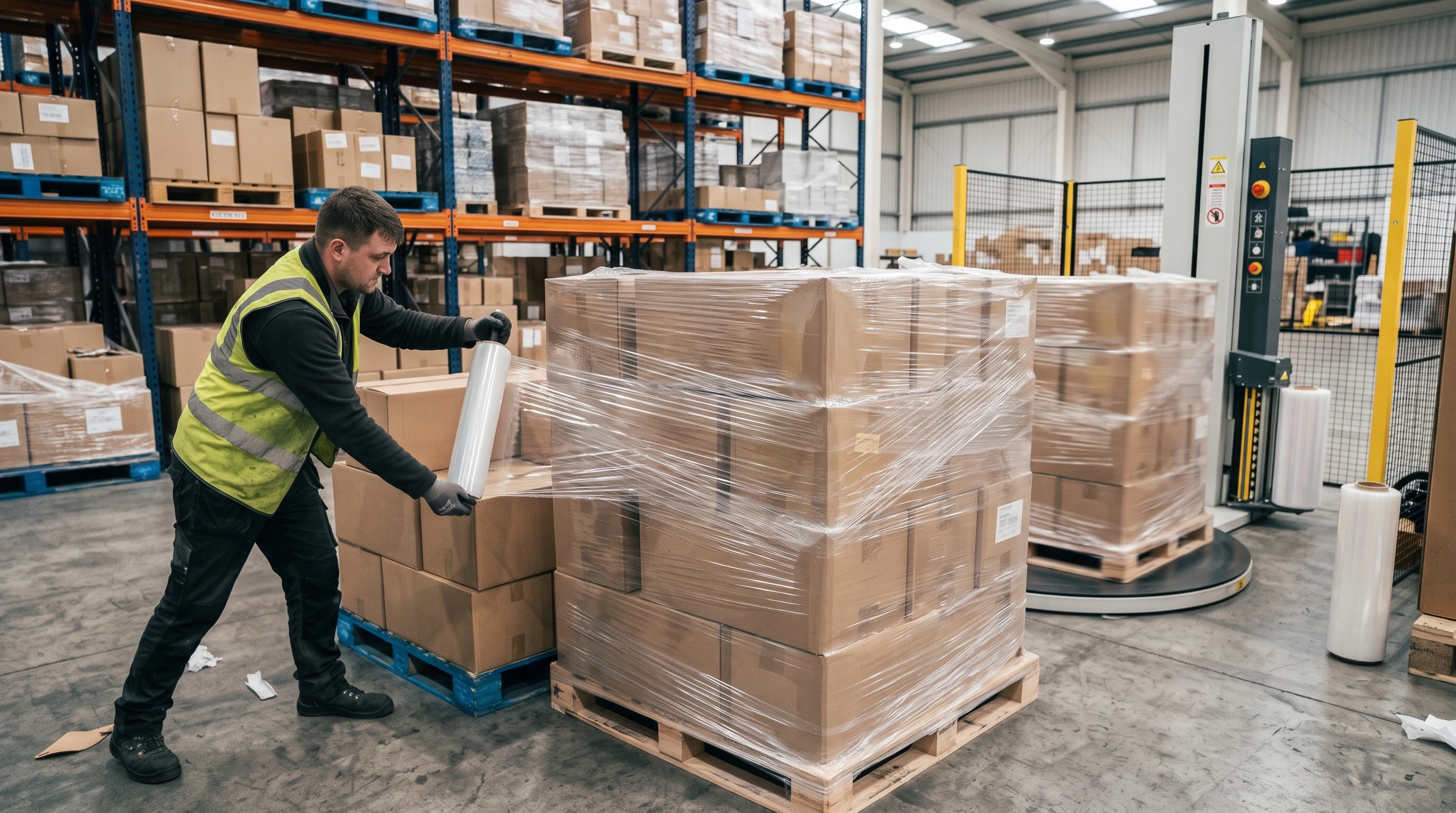
If an operator spends several minutes walking around each pallet, pulling film, applying tension and securing the load, those minutes become a significant cost when repeated hundreds of times each week.
There is also the physical side of the job. Repeated bending, reaching, pulling and walking around pallets can place additional strain on operators, particularly in high-volume environments.
Consistency is another consideration. Different operators may apply different levels of tension or use different numbers of wraps. That can lead to inconsistent containment and unnecessary film waste.
When Hand Wrapping Still Wins
A machine isn't necessarily the right investment for every warehouse. For low-volume operations, the labour savings may not be enough to justify the machine's upfront cost. Hand wrapping can also work well where pallet loads are irregular and operators need to adjust the wrapping method from one load to another.
Floor space can be another deciding factor. A pallet wrapper needs a suitable area for installation and operation, which may not be practical in a warehouse where every square metre is already being used.
If your volume is relatively low and your current process is working well, hand wrapping may remain the simpler and more economical approach.
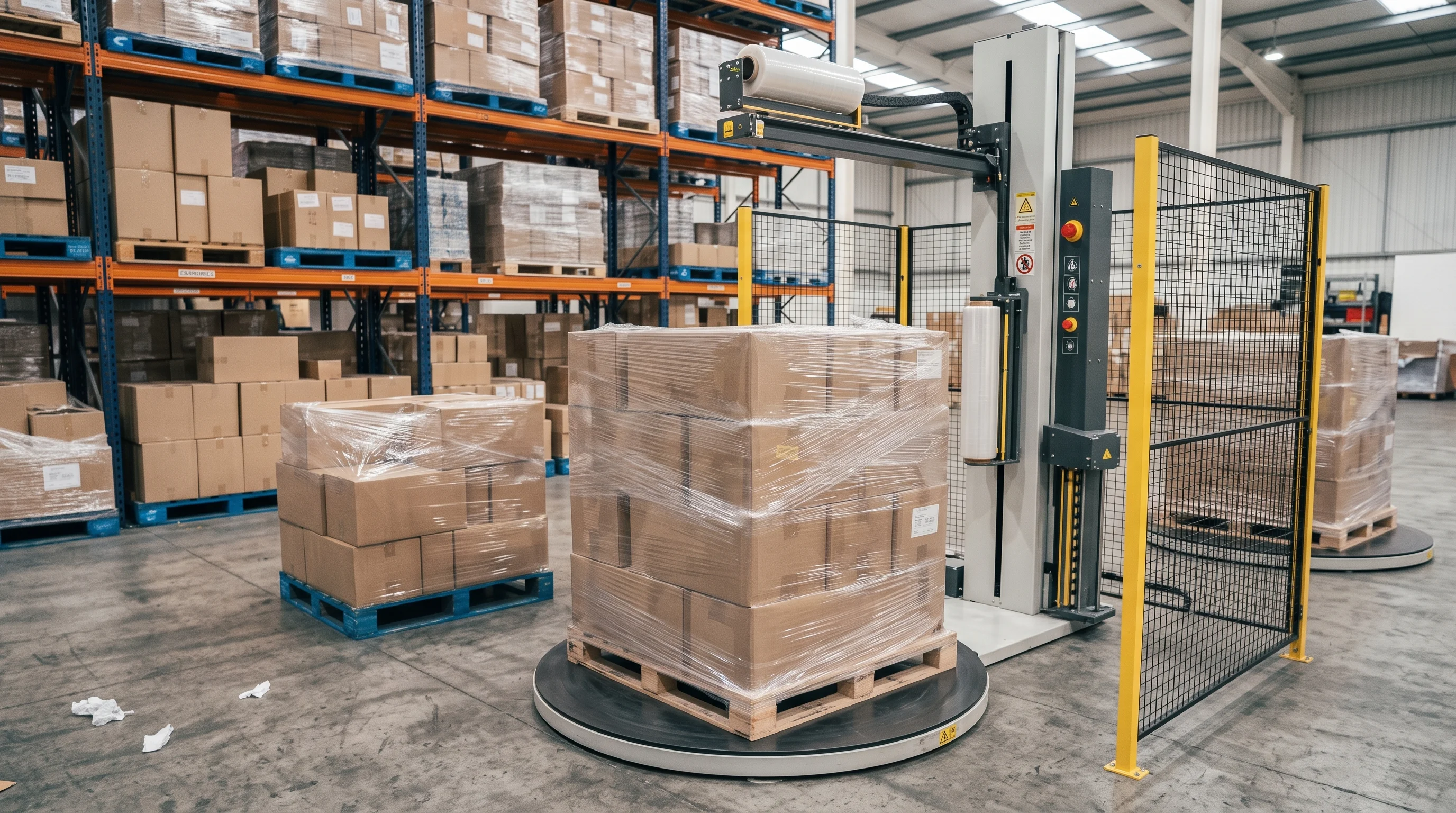
What Changes When You Switch to Machine Wrapping?
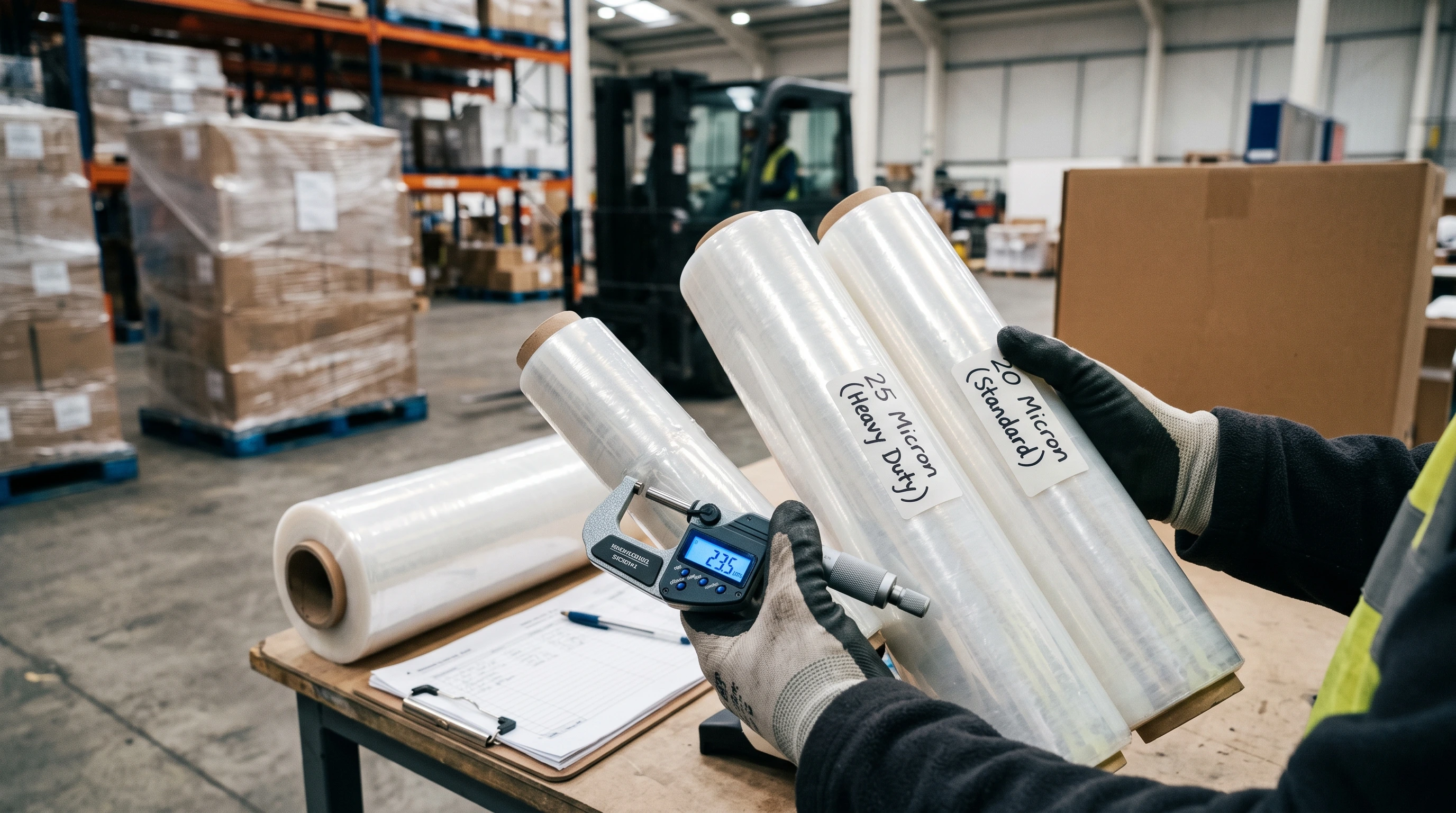
Moving from hand wrapping to machine wrapping can also mean changing the type of film you buy. Core size is one of the first things to check. Machine rolls may use a different core size from hand rolls, so the film needs to match the machine you're purchasing. However, roll weight also plays an important role. Hand rolls are designed to be carried by an operator, while machine rolls can be considerably larger and heavier because they remain mounted on the equipment.
You may also want to consider pre-stretched film. Because the film has already been stretched during manufacturing, it can reduce the effort required during application and, depending on the machine and load, may help reduce film consumption.
Before switching, look at the complete setup: machine compatibility, core size, roll weight, film type and the loads you wrap most often.
FAQs
Is a pallet wrapper worth it?
For a warehouse wrapping higher pallet volumes every day, it can be worth investigating. The decision should be based on your current wrapping time, labour cost, film consumption and expected machine cost rather than pallet volume alone.
How much does a pallet wrapping machine cost in Australia?
Pallet wrapping machine cost in Australia varies depending on the machine type, automation level, capacity and features. The purchase price is only part of the calculation; potential labour and film savings should also be included when working out the payback period.
Is machine stretch film cheaper than hand film?
Not necessarily when comparing individual rolls. The more useful comparison is the total cost per pallet, including film consumption, labour time and the other costs associated with your wrapping process.
What is the realistic price range of a pallet wrapping machine in Australia?
A basic semi-automatic pallet wrapping machine typically costs around A$5,000–A$15,000, while more automated systems can cost A$15,000–A$30,000 or more. The final price depends on the machine type, automation, specifications, installation and other features.
What is the cost per pallet for hand film versus machine film?
Hand wrapping generally costs more in labour because an operator must wrap each pallet manually. Machine wrapping can reduce labour time and film consumption through more consistent application. The actual cost per pallet depends on current film pricing, film consumed, labour rate and wrapping time.
How many pallets per day is the tipping point where a machine pays for itself?
There isn't a fixed number for every business, but around 20–30 pallets per day is a reasonable point to start comparing the costs of hand and machine wrapping. The actual payback depends on machine price, labour costs, film savings, maintenance and daily pallet volume.
How much film can machine wrapping save compared with hand wrapping?
Machine wrapping can reduce film consumption because the machine applies more consistent tension and stretch than manual wrapping. The actual saving varies by load, film type, machine settings and operator technique, so measure your own film use per pallet before and after.
What are the hidden costs of hand wrapping?
The biggest hidden cost is labour time. Repetitive manual wrapping can also contribute to operator fatigue and physical strain, while inconsistent tension can result in excess film use or inadequate coverage. These costs can become significant as daily pallet volume increases.
When does hand wrapping remain the better choice?
Hand wrapping can still make sense for lower volumes, irregular loads, mixed pallet sizes, unusual load shapes or operations with limited floor space. It also provides more flexibility when pallets vary significantly from one shipment to another.
What film specifications change when moving from hand wrapping to machine wrapping?
You may need to change core size, roll dimensions, roll weight and film type when moving to machine wrapping. Machine rolls are generally larger and designed to remain mounted on the equipment. Pre-stretched or machine-grade film may also be used depending on the machine's specifications and pre-stretch system.